
About
Hi, I’m Jason.
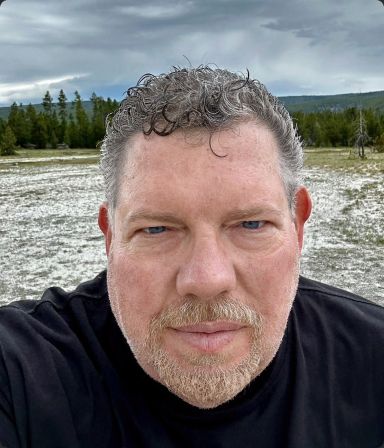
I got my start designing for a local newspaper, the Pennysaver, while studying fine art at the Long Island High School for the Arts. I then studied psychology and worked with people with disabilities, which gave me a deeper understanding of how people interact with and experience the world in different ways. My background in art and psychology still guides my work today: aesthetics draw users in, simplicity reduces cognitive load, and accessibility ensures no one is left behind.
I returned to design at Arizona State University’s Herberger Institute for Design and the Arts, where I studied graphic design. A job designing wayfinding signage at an architecture firm led me to software and to Microsoft. Since then I’ve run my own design studio, helped Rapid7 grow from a small startup to an IPO, redesigned the Malwarebytes product, and led design for ORO, a pet care robot that won a 2024 CES Innovation Award in robotics.
I design things people find easy and satisfying to use, and that a business can build and keep growing. I’m equally comfortable leading a team or working as an individual contributor. I do my best work on lean, fast‑moving teams where people collaborate and care about outcomes. AI is part of how I work now. I designed and built this site with it.
I’m based in Tampa Bay and available globally for full‑time and fractional roles in product design and product management.
Career
My path so far
The writing was on the wall. While studying design at ASU I was fortunate to land a job at Cornoyer‑Hedrick, one of the Southwest’s premier architecture and graphic design firms. I worked on logos, collateral systems, and wayfinding systems: the signage (cues) that helps people (users) navigate a physical space. That is where it clicked. Successful wayfinding in physical spaces (buildings) and navigating virtual spaces (software) share the same elements: orientation, routing, guidance, recovery, cues, design systems, and accessibility. I knew then that my future was not in graphic design. I wanted to design software. So, for my senior thesis, I did something different than my classmates and designed and coded a kiosk‑based wayfinding system for the Desert Botanical Garden in Phoenix. That is how I found my way from Tempe, AZ, to Microsoft in Redmond, WA, after graduation.
Where that came from. I grew up in New York and went to a high school for the arts, where I studied fine art and dabbled in voice and playwriting. One summer I volunteered at a camp for urban autistic teens in upstate New York, and then at a program that taught adults with intellectual and developmental disabilities to navigate the NYC subway and bus systems. I loved the people and the work, so I decided to study psychology and took a job with the New York State Department of Education working with teens with behavioral challenges. Those years taught me that people experience the world differently, and that accessibility is more than an expression of empathy or a line on a compliance checklist. It is a baseline requirement in the design of products that work better for everyone.
Microsoft and my own studio. At Microsoft I owned the design for complex enterprise products on the Windows and Windows Server teams, and learned research, interaction design, accessibility, and product strategy from some very talented people. I later co‑founded a medical startup. When it did not survive a downturn, I started SoftAssociates and grew it to a team of ten, including six designers, working on Microsoft CRM and Windows, including Windows Speech Recognition, an accessibility feature that let people run a computer by voice.
Rapid7 and startups. Rapid7 hired me when it was a security startup of fewer than twenty‑five people. I built a team, designed enterprise security experiences, and helped hire the president and CEO. Bain Capital came on and guided the company to an IPO valued at close to a billion dollars on its first day. That is where I came to love startups, and not for the IPO. It was building a product and an organization our audience needed, at speed, with people who jumped in wherever they could add value.
Malwarebytes and consulting. Consulting took me back east, and a client, Malwarebytes, brought me to Florida to design consumer and enterprise security experiences. I built the UX research program and a great team, and we redesigned the product so someone under stress could get protected without needing help. Usability scores jumped from the 48th to the 89th percentile. Since then I have consulted on enterprise, consumer, and defense software. For a warehouse software company, I led design, product management, and a team across the US and India that rebuilt the product for the cloud; the company was later acquired. Some of my work is under NDA, so I share it in conversation.
Ogmen Robotics and ORO. At Ogmen Robotics, four things I care about came together: pets, startups, R&D, and AI. I joined as a Strategic Advisor, then as Head of Design, led UX and product design for ORO’s touch screen, mobile, and voice products, and helped get the company to CES, where ORO won the Innovation Award in robotics. I then spent three months in India with the CEO turning a prototype into a three‑year plan. ORO finds its own way around a home. The writing on the wall became the intelligence that helps it navigate on its own.
What’s next. I’m looking for a team that is building something and finding its own way, at a startup or an established company that runs like one. AI is part of how I work now. I designed and built this site with it, and the story of how is in my Built with AI case study. If your team needs someone to solve complex problems and design experiences people can find their way through, I would like to hear from you. I also love to mentor and am always glad to meet like‑minded people, so reach out about an opportunity or just to say hello.
Beyond work
When I’m not designing
When I’m not designing, you’ll find me biking, traveling with my family, navigating an art museum, at our local dog park with our doodles, or getting lost in a map. I’m a cartography nerd and can look at one for hours, especially if I’m planning a trip. I love a good road trip (ask me about my grizzly encounter in northern British Columbia) and international adventures, from Jaipur to Frankfurt to the Great Barrier Reef. And our home is my longest‑running design project. I think there is a direct correlation between hours spent watching HGTV and dollars spent on home improvement projects. The truth is, when I’m not designing, I’m still designing, and always with the goal of making things better than they were when I found them.
-
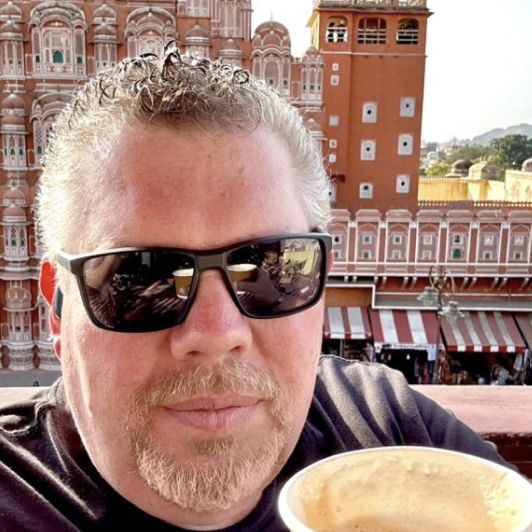
A break from roadmap planning: chai in Jaipur -
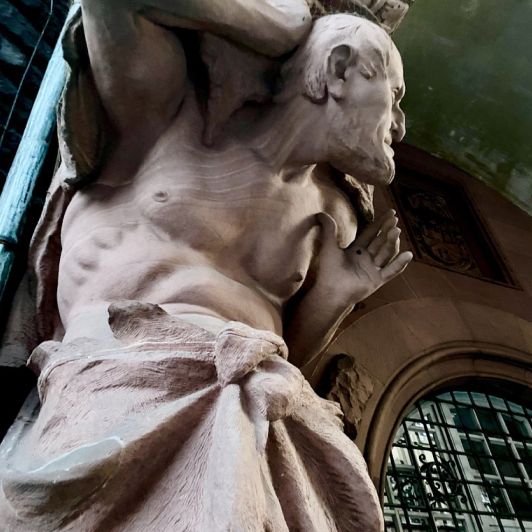
Load‑bearing design, Frankfurt -
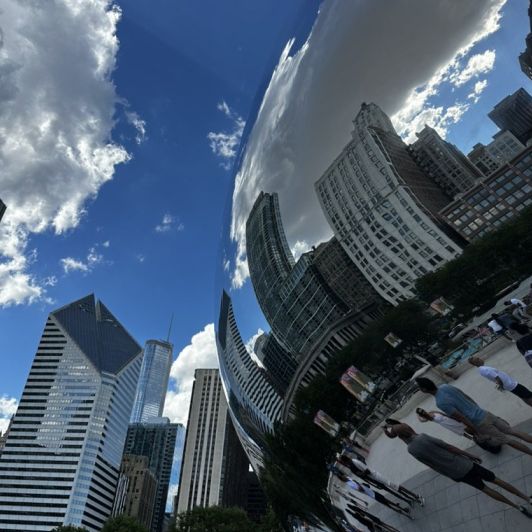
Reflecting on life at the Bean -
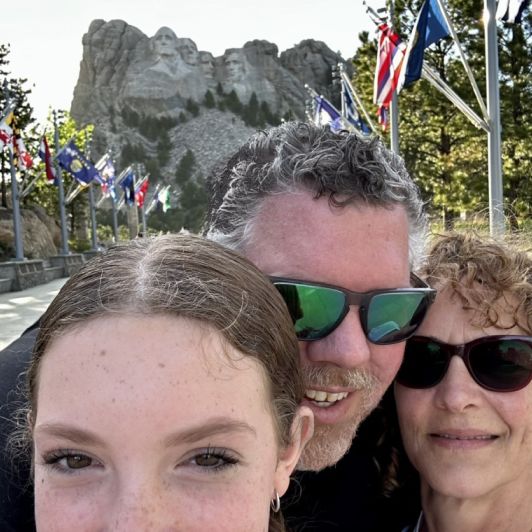
Family road trip, Mount Rushmore -
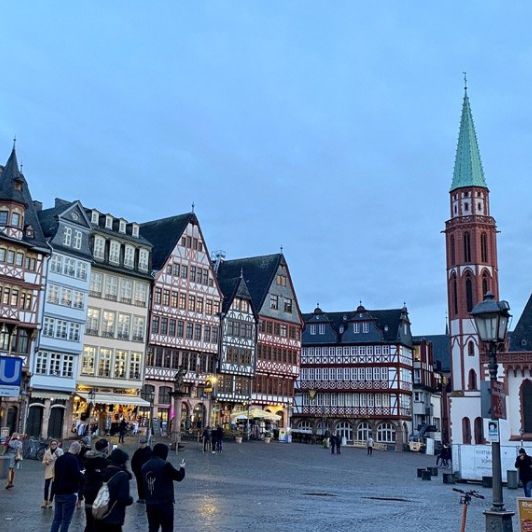
Old town, new perspective: Römerberg, Frankfurt -
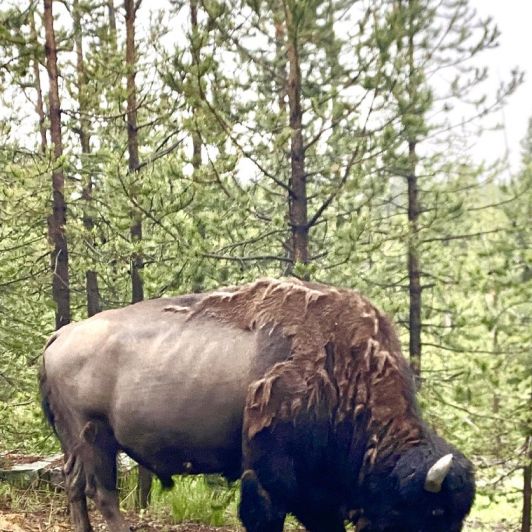
The locals, Yellowstone -
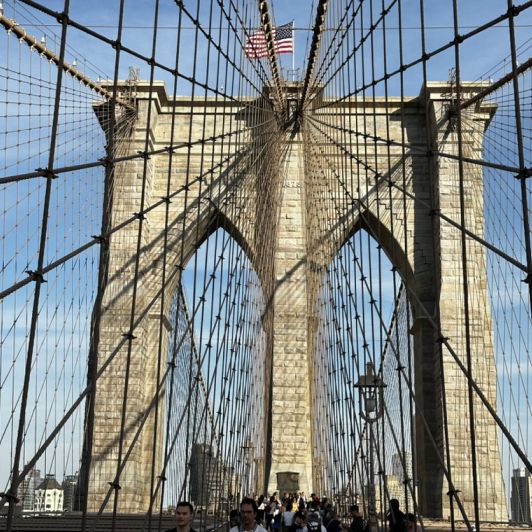
Back home: the Brooklyn Bridge -
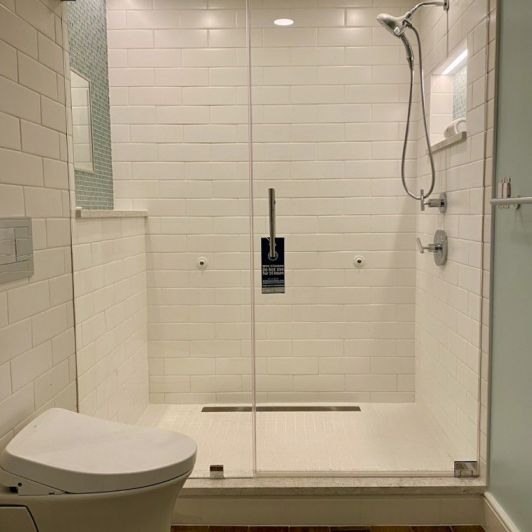
Exhibit A: the HGTV effect -
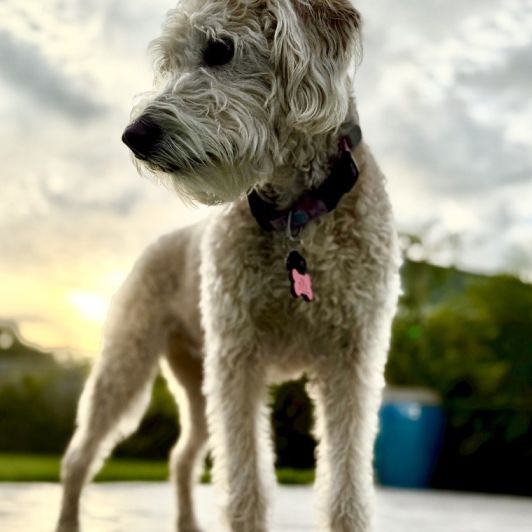
One of my doodles contemplating a jump in the pool -

Road trip crew -
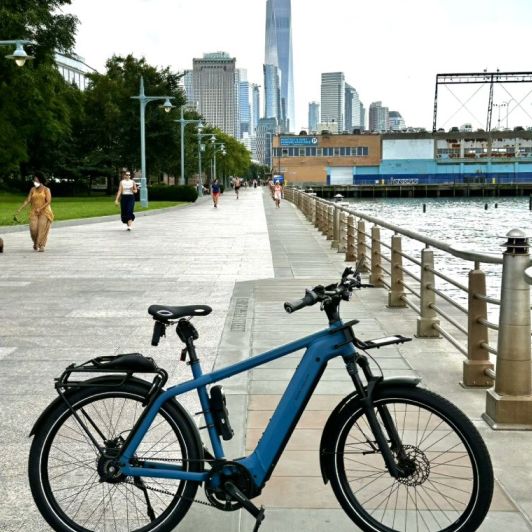
Taking my bike with me on road trips -

Our backyard, after the HGTV effect